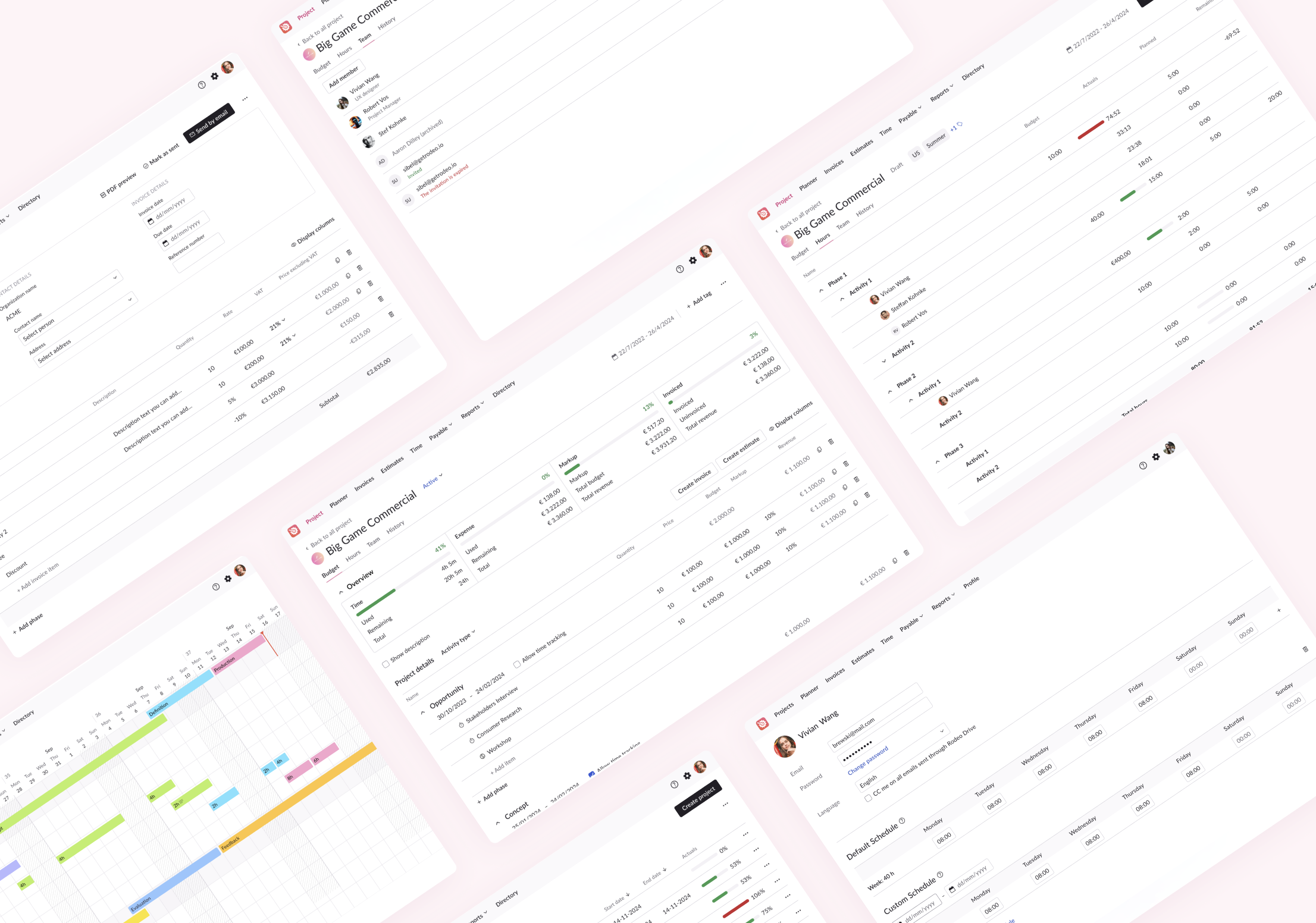
Supercharging projects
Hit deadlines others can't. Accept new business with confidence, knowing the resources are there to deliver.

Project planning is vital for creatives in their businesses. Despite our product featuring this functionality, its limited usage is attributed to a mismatch with certain users' needs. Unfortunately, this discrepancy has resulted in dissatisfaction, leading 40% of users to discontinue our product due to unsatisfactory project planning. Our product's objective is to decrease customer churn and enhance sales conversion rates.
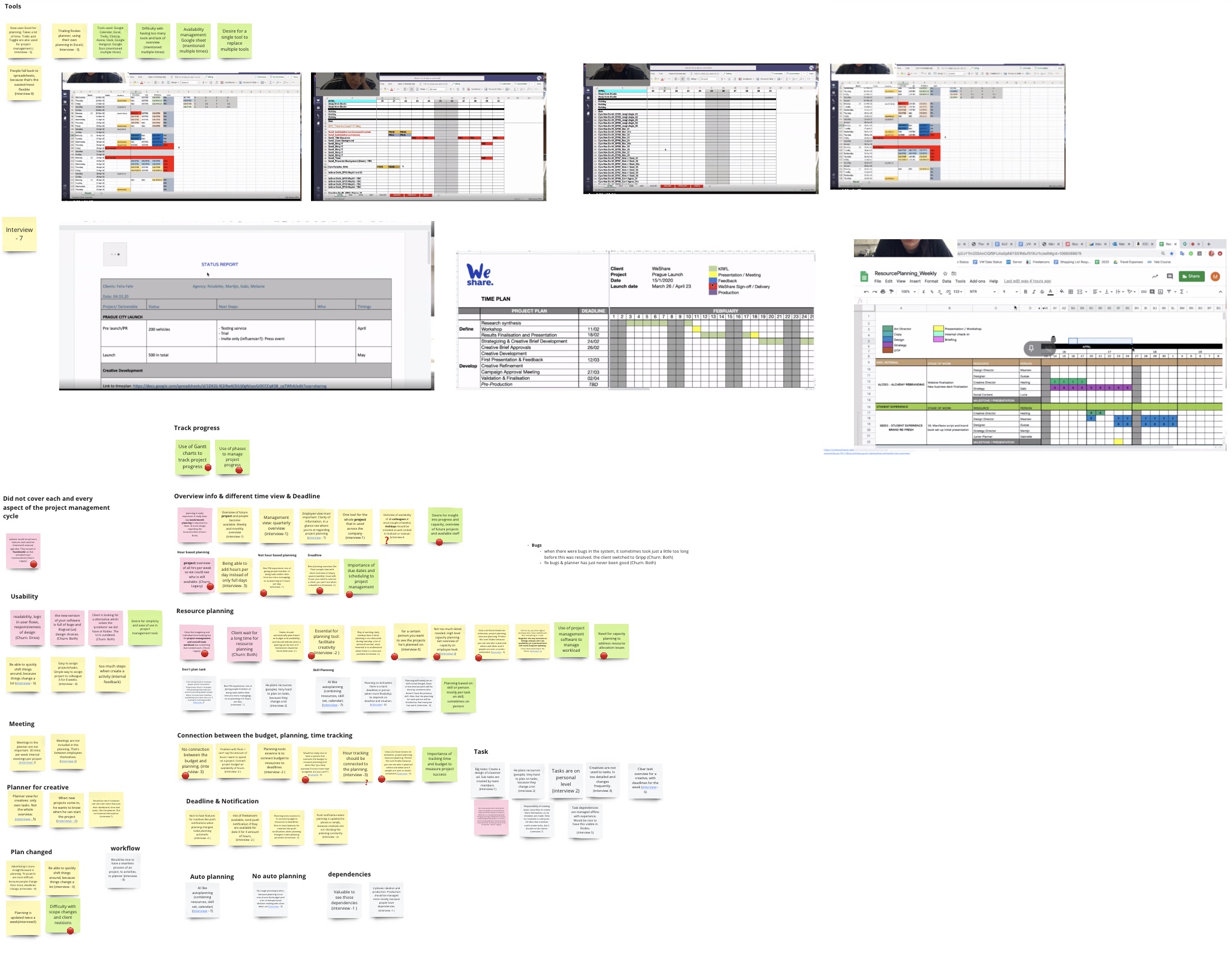
To effectively reduce customer churn, I reviewed feedback from departing users and interview notes. Upon organizing these them, three prominent issues emerged:
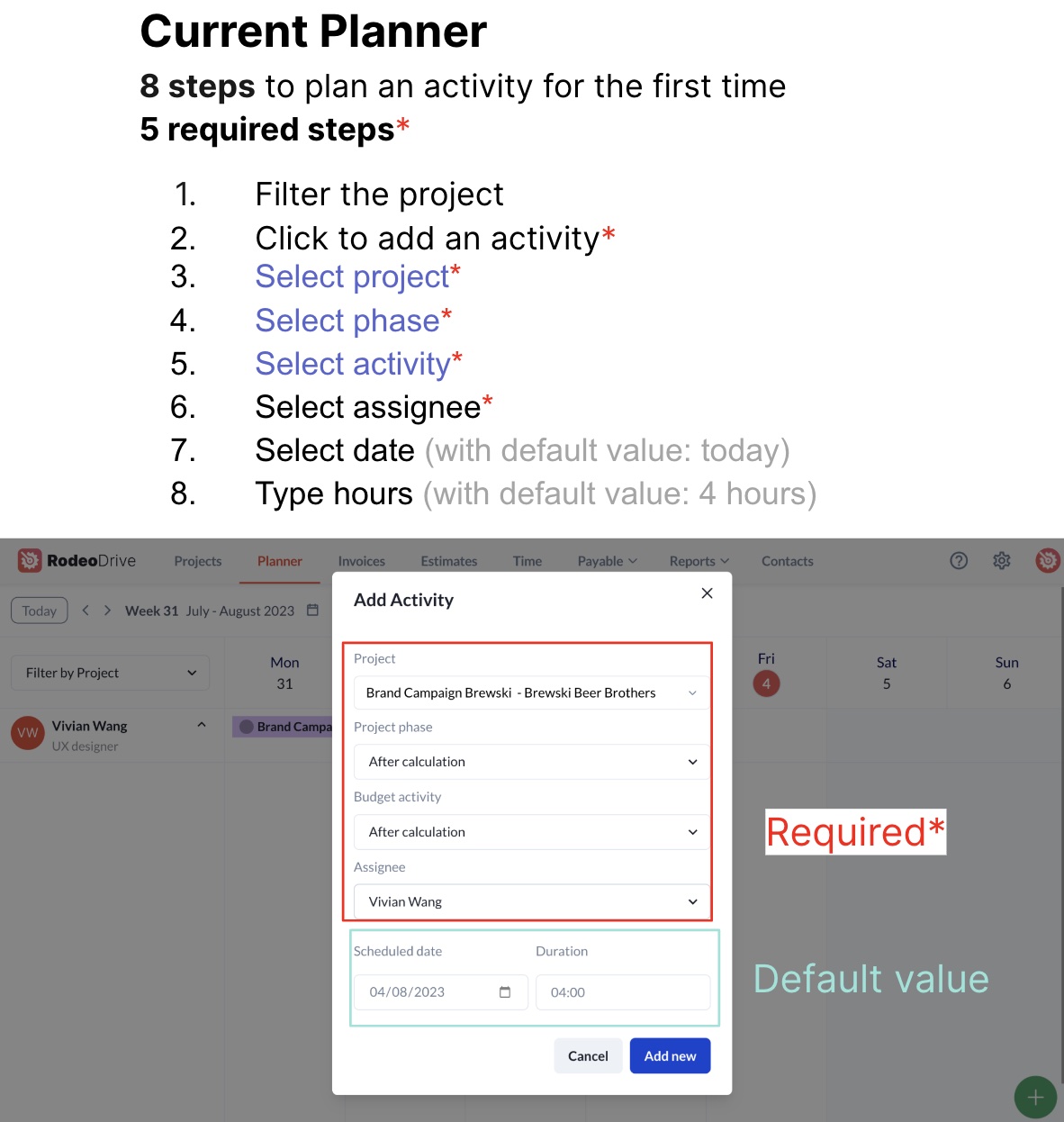
We had a project planning feature, but it wasn't widely utilized by our clients. To enhance usability, I reviewed the flows and designs, uncovering a primary concern: there are too many steps for users to plan their activities initially. My design objective is to simplify project planning.
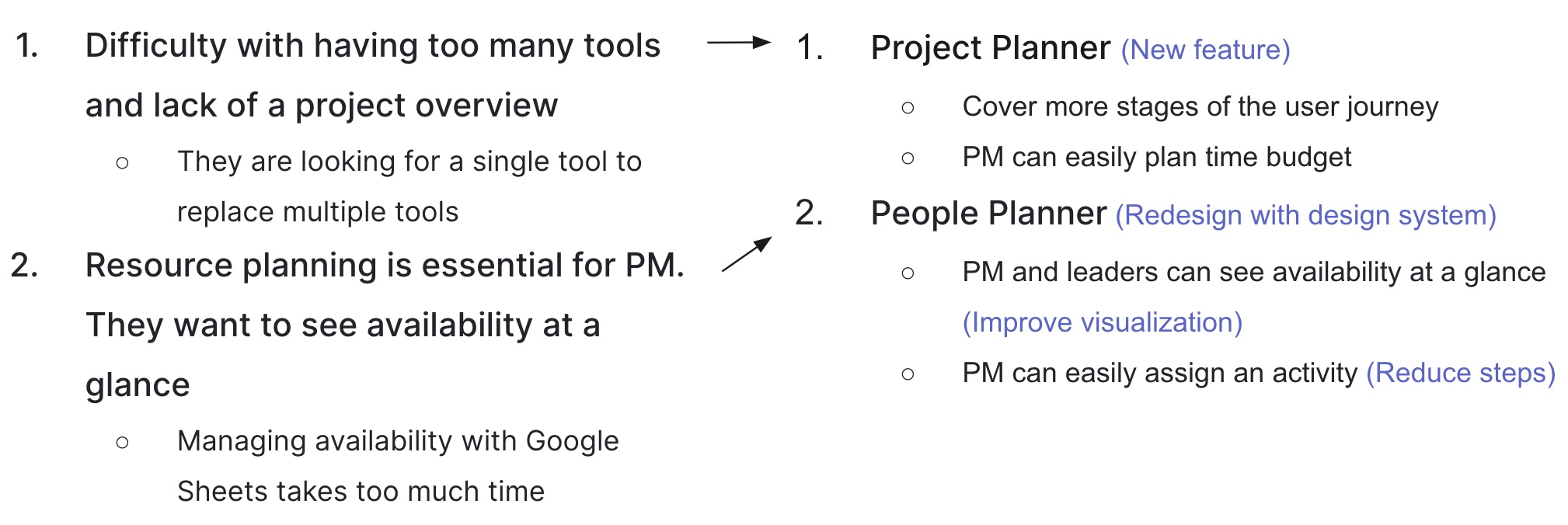
After conducting the discovery process, I shared the insights and proposed the problems we aim to solve along with potential solutions to the product manager. Subsequently, we collaborated to outline the identified problems and their potential solutions and presented them to The Head of Product.
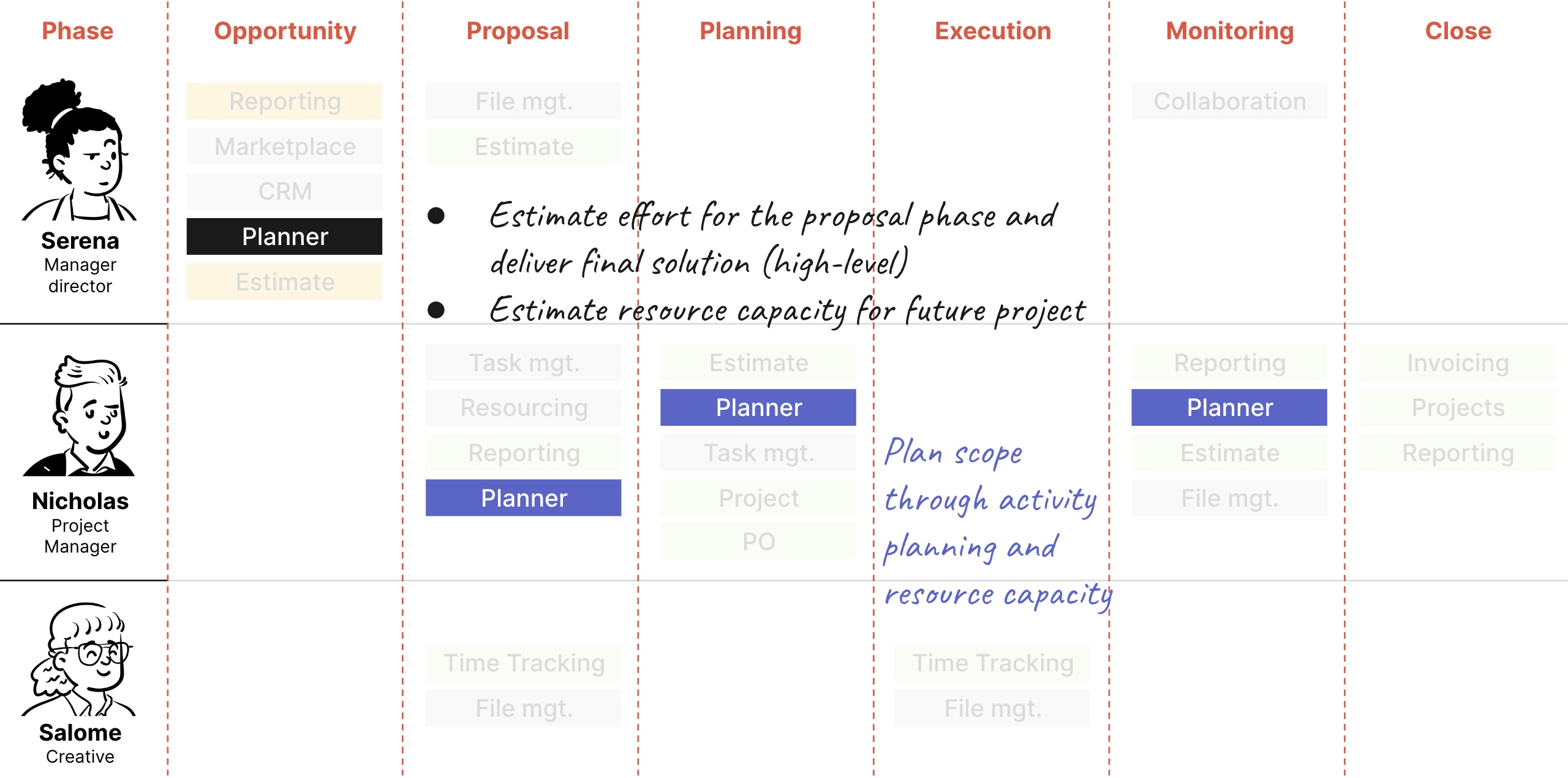
To streamline project management for our users, I pinpointed the touchpoints where users initiate project or resource planning based on interviews. This approach enabled me to effectively share and align understanding with team members.
To meet user needs, I set research goals focused on understanding how to make our product appealing, identifying overlooked pain points in our user journey, and exploring simpler alternatives to competitors' solutions. I analyzed six relevant competitors based on user feedback and shared insights with the product owner to define our MVP scope.
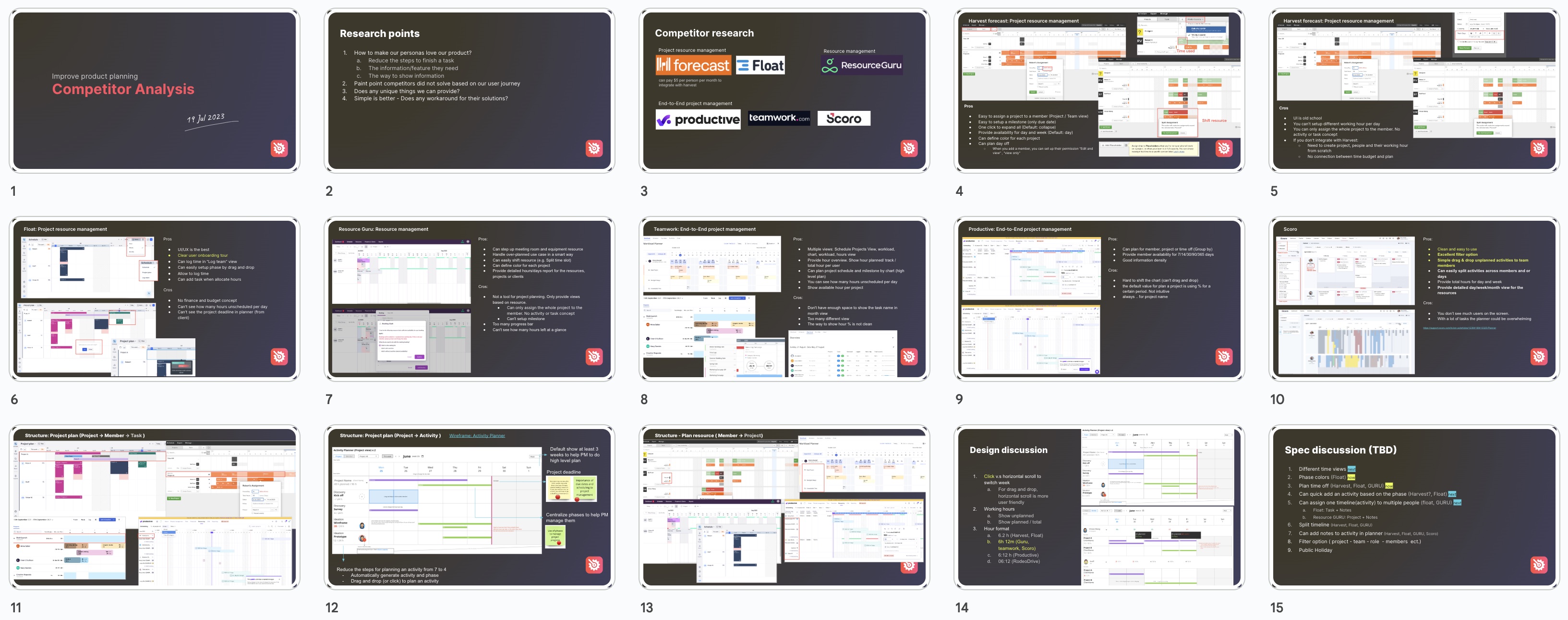
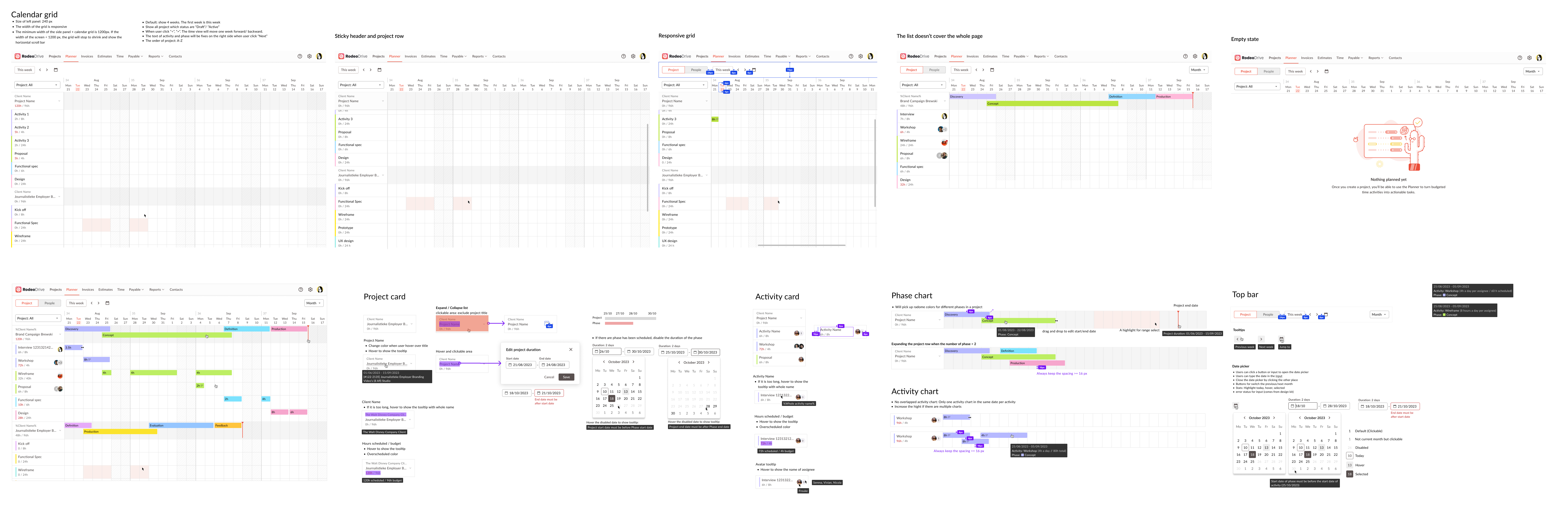
To ensure effective communication of the scope and alignment on the solutions we aim to address, I wireframed key screens and shared ideas with the project manager and our scrum team. Additionally, I gathered feedback and confirmed any technical constraints to ensure our solutions are feasible and aligned with our goals.
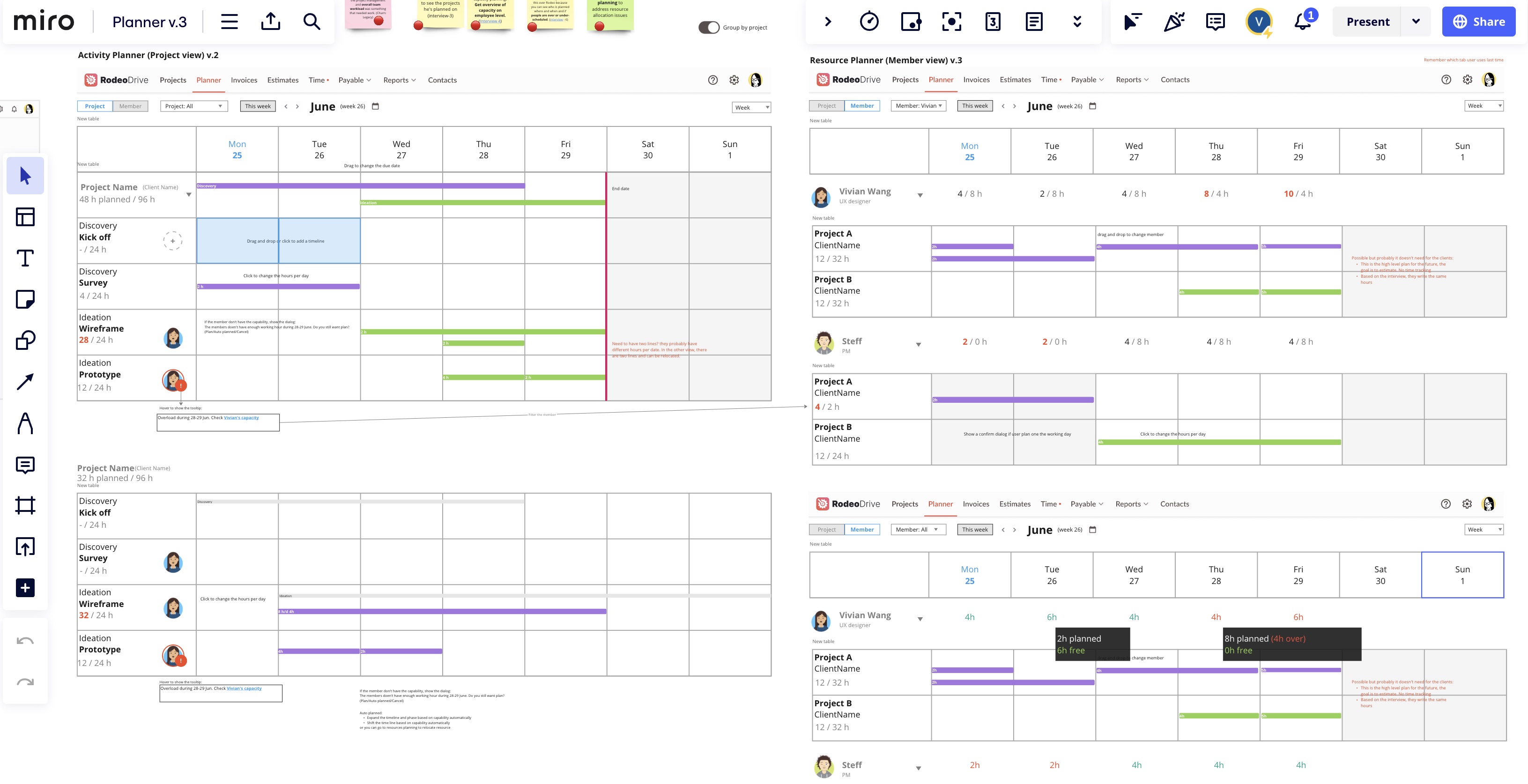
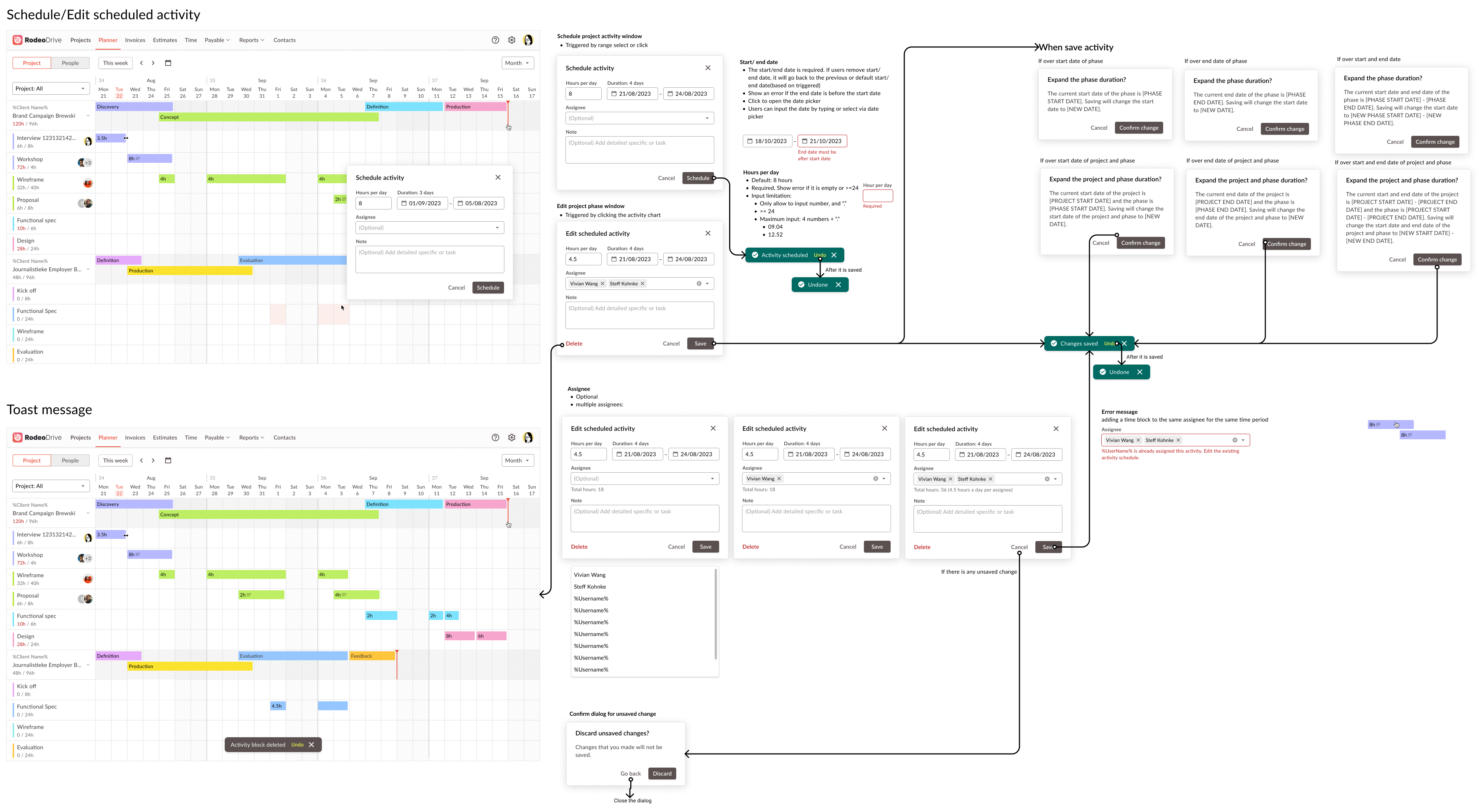
Using wireframes as a foundation, I developed prototypes and conducted three brief user interviews to validate our assumptions. Subsequently, I refined the prototypes based on their feedback and showcased them in review sessions:
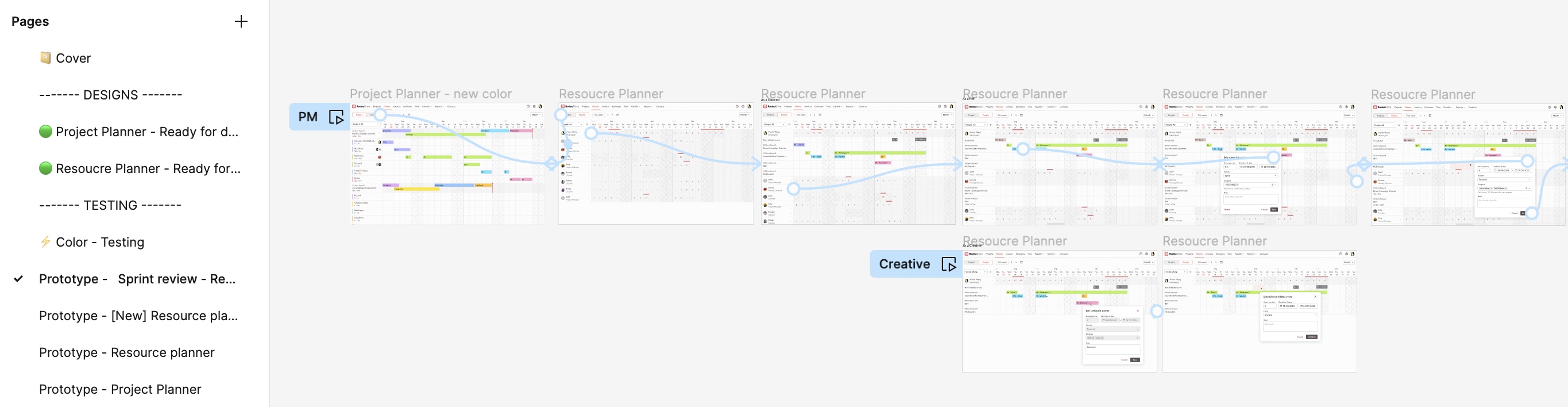
After the discussion with the Scrum team, we dissected the solutions into UI elements, user flows, and tasks to expand the design system. Collaboratively, we strategized ticket planning every two weeks. Additionally, I ensured that all design details were solidified before the start of each new sprint.
After our three-month release, we successfully achieved a 62% increase in monthly new users, leading to enhanced sales conversion rates. Additionally, weekly active users increased by 60%, and we significantly reduced the customer churn rate. In summary, these developments have had a notable positive impact on both new and existing users, and we have received positive feedback from our users.
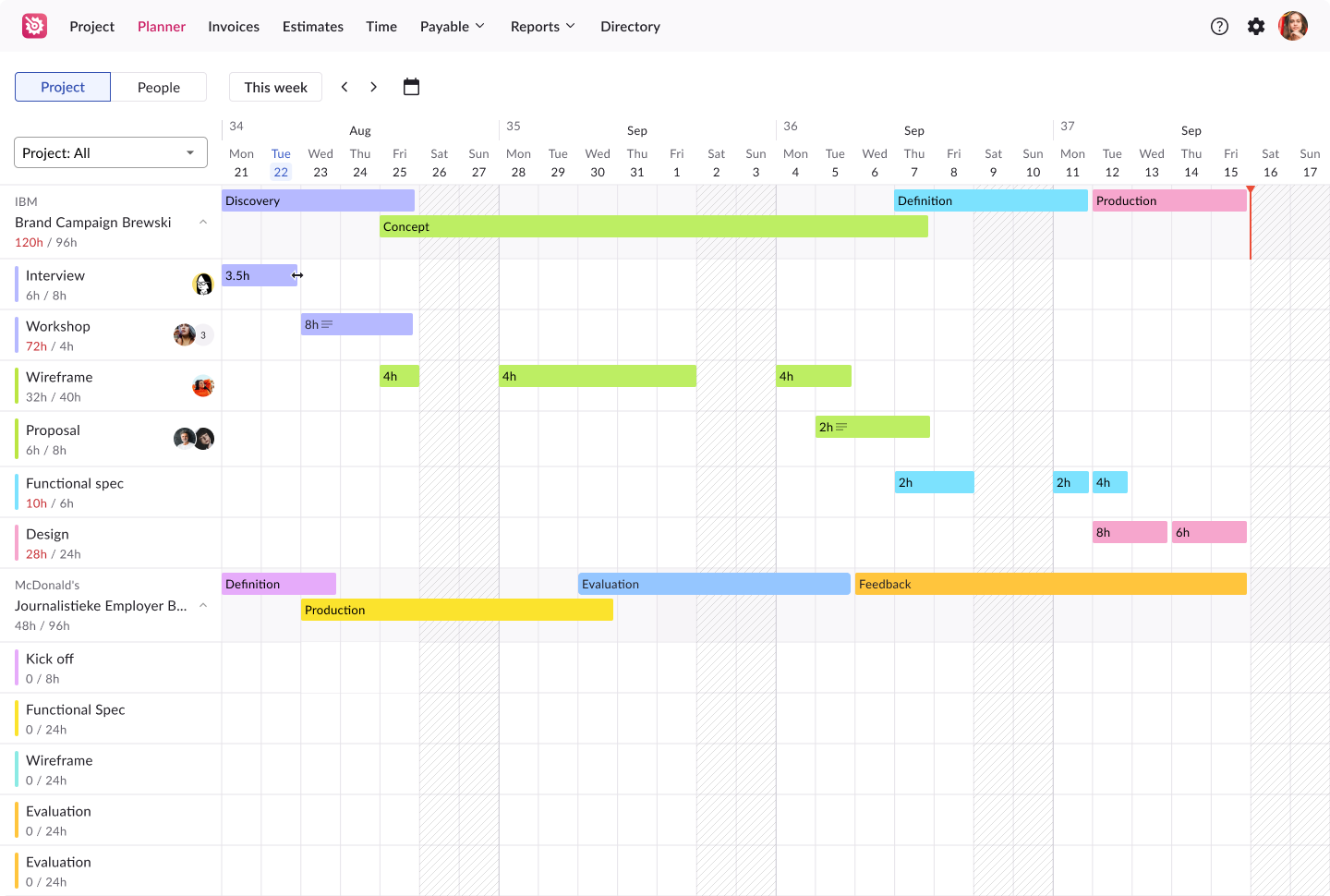
With just two simple steps, empower team to optimize billable hours based on budgets and achieve key milestones punctually.
Enjoy cleaner communication flows. Allocate team members to important action items, manage deliverables, and regain control over time.
Discover availability, optimize resource allocation, and prevent burnout with the planner's people view. Track each member's capacity and manage time budgets effortlessly.
Expand milestones and adjust activity schedules seamlessly to optimize your timeline.
Easily track activities associated with each phase at a glance.
In my previous experience at a larger company, daily communication with the development team wasn't normal. This occasionally led to surprises when reviewing developer implementations. However, joining daily stand-ups with the Scrum team, I've been impressed by the value of closer collaboration. It enables us to ensure everyone stays aligned, to address technical challenges, and to optimize efficiency together. It's rewarding to see how we can support each other and drive progress towards our common objectives. Ultimately, we were able to deliver an MVP version within 3 months.
I used to deliver highly detailed designs, but I realized it's not ideal in a startup due to time constraints. I've learned that rather than documenting rules, direct communication is more effective. If team members require documentation, I provide details at that moment, which is also adequate. This approach accelerates my design process.